Worn-Shoe Assumption Bias

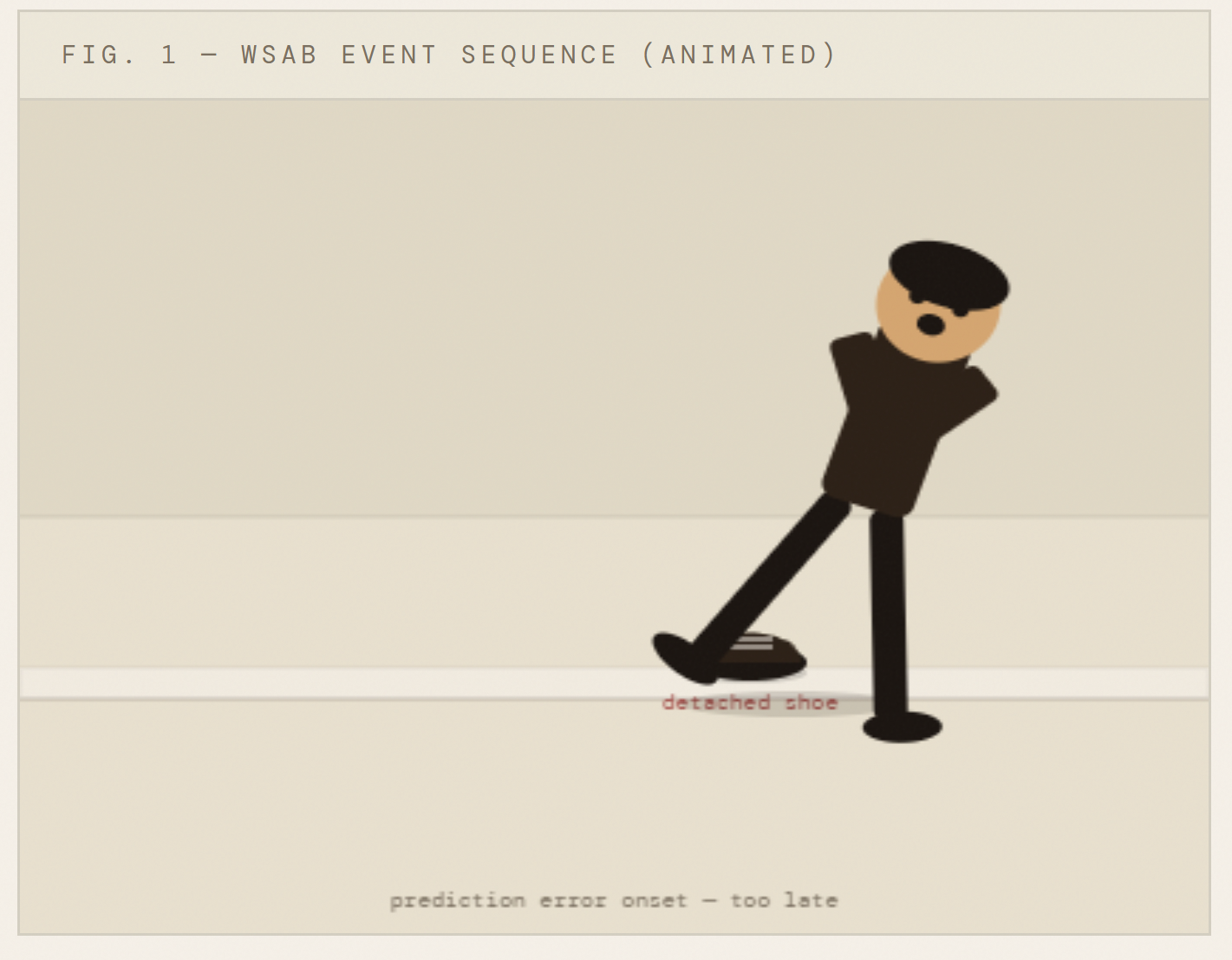
You take your shoes off at the door, walk three steps into the hallway, and then — wham. You're doing an impression of a falling tree. The culprit? The very shoes you just removed.
The Weird Way Your Brain Tracks Your Body
Your brain maintains a constantly updated mental map of your own body — where your limbs are, what you're holding, even what you're wearing. This is called the body schema, and it's remarkably plastic. Studies have shown that people who use tools regularly start to incorporate those tools into their body schema, perceiving a long rake, for example, as a temporary extension of their arm.
Shoes are no different. You wear them for most of your waking hours. Over years of daily use, your brain quietly folds them into its model of "you." They become part of the picture.
So What Happens When You Take Them Off?
Here's where it gets interesting. When you remove your shoes and drop them on the floor, your brain's body schema doesn't necessarily update straight away. The prior — the standing prediction that shoes are on your feet — lingers.
This means when you walk toward that shoe on the floor, your visual system may not fully flag it as an obstacle. After all, your brain's best guess is that the shoe is attached to you. Why would you need to step over part of yourself?
I've called this the Worn-Shoe Assumption Bias, or WSAB. The idea is that the shoe's strong association with being worn reduces its perceptual salience as a hazard in the brief window after removal.
It's Not That You Weren't Looking
This is the part that's a bit counterintuitive. WSAB isn't really about distraction or not paying attention. You could be staring right at the shoe and still trip, because the issue isn't detection — it's classification. Your visual system sees the shoe. It just doesn't ring the obstacle alarm with the urgency it would for, say, a brick or a toy left on the floor.
The prediction error — the brain's signal that something doesn't match expectations — is dampened because the shoe matches a very familiar context: your own foot. It's only when your foot makes physical contact that the mismatch snaps into sharp focus. By then, you're already mid-stumble.
Learn more at the WSAB microsite.